Retail AI Stack, article 2 of 6. Stack focus: Data Sources & Capture and Data Platform & Governance. New to the series? Start with The Retail AI Infrastructure Stack, Mapped.
Imagine a store where the inventory system says there are twelve bags left. The shelf is empty. Someone checking the stockroom finds all twelve bags in a box.
The records seemed to disagree until we understood what each one was describing. “In the store” and “available to pick up from this shelf” are different answers to what sounds like the same question.
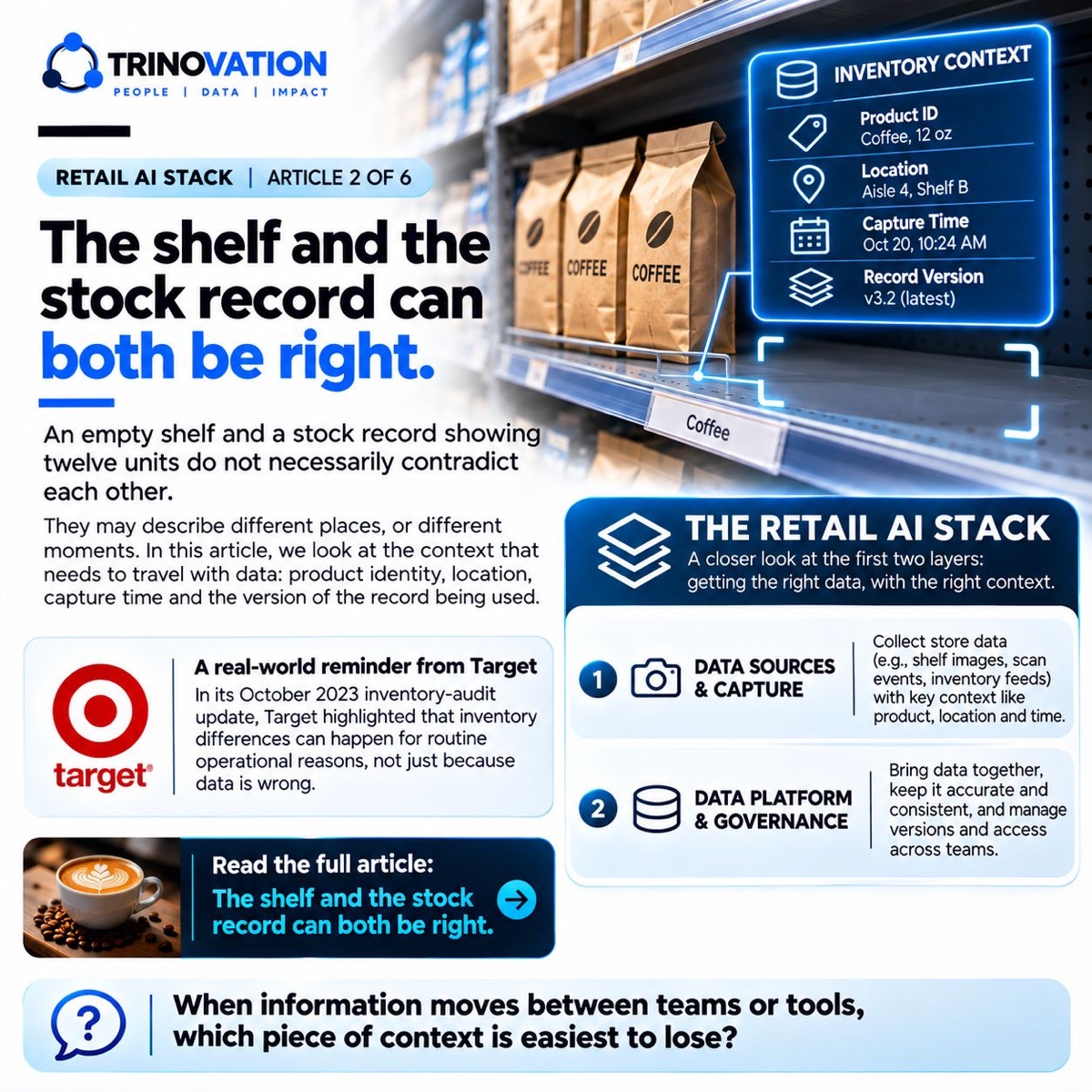
What each source can observe
We find that distinction helpful when thinking about the information an AI system receives. Before asking it to decide what is happening, it is worth asking what it can actually observe.
A camera can show the shelf at a particular moment. A stock record can show what has been recorded as delivered or sold. A product catalog can tell us which coffee comes in which size. Each contributes something, and each leaves something out.
Zebra’s RFID readers offer another example. They capture information from radio tags attached to stock and assets. That can help a system observe tagged inventory, but a tag reading alone does not tell us whether a shopper can reach the right bag of coffee.
Keeping time and context attached
The next challenge is keeping those observations understandable as they travel. A photograph needs its location and capture time. An image taken before the shelf was refilled could arrive afterward. If the system treats arrival time as capture time, an old gap can look like a new one.
A person in the aisle has context that a file may lack. They can see the promotional stand nearby or ask a colleague whether a delivery has been unpacked. A system needs relevant context to be recorded and connected deliberately.
This is part of what data platforms make possible. Databricks’ Unity Catalog, for example, helps teams organize data, manage access and trace its history. That history becomes useful when someone needs to understand which records contributed to a result or why an answer changed.
The platform still needs people to maintain the connections. Two records labeled “coffee” might describe different brands, sizes or locations. A shelf photograph from yesterday may need yesterday’s layout, rather than the promotional arrangement introduced this morning.
To us, that makes the connection between records as interesting as the records themselves. We want to be able to follow the trail without asking someone to reconstruct it from memory.
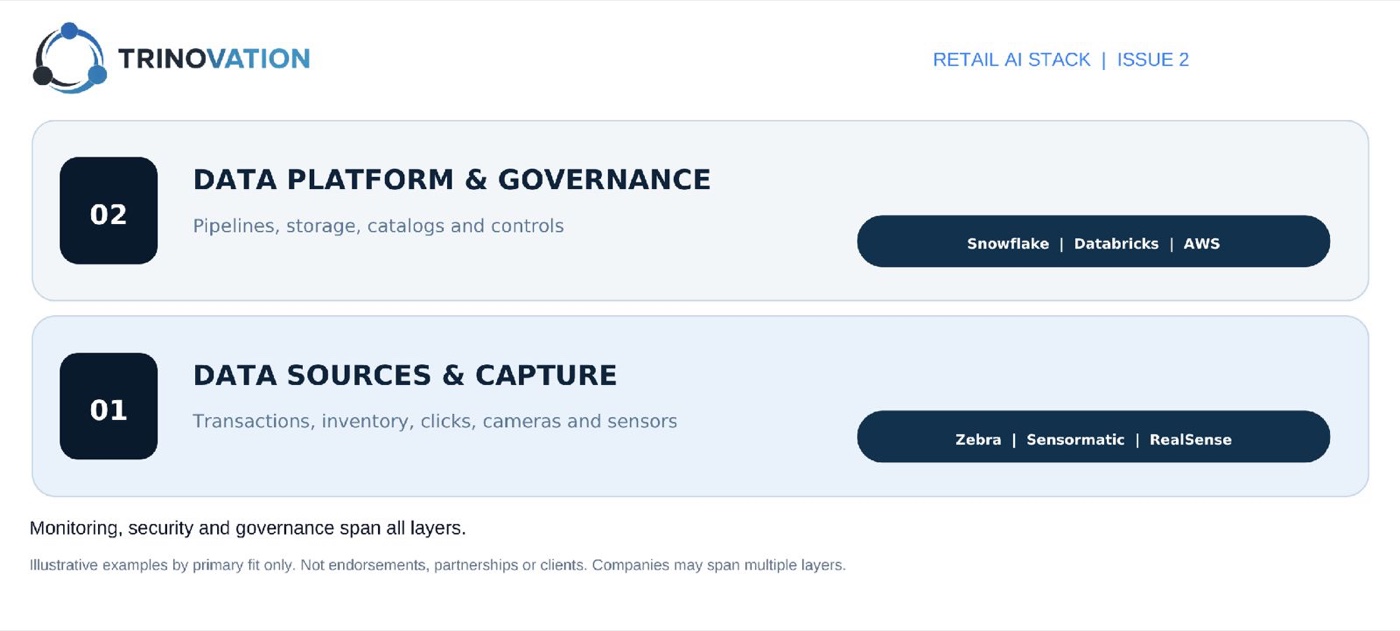
What a retailer found in its own stock records
Target described a related problem in an October 2023 technical article: physical audits showed that half of its out-of-stocks were unknown to its systems. Its approach used operational data and machine learning to identify likely discrepancies, with human verification before corrections were automated. Target also explained that it removed sensors and cameras from that approach because of cost and maintenance.[1]
That is a useful counterpoint to our camera example. Better availability does not always require more images. The right evidence depends on the problem, the data already available and the operational cost of collecting more.
Working through records that disagree?
Trinovation builds the annotated, reviewed and versioned data behind retail AI, with the context attached.
Book a 30-Min Call →Making the connection inspectable
For the coffee shelf, we would want a team to be able to follow one observation back to its source. Which store and shelf does it describe? Which product identifier was used? When was the image captured, and which version of the shelf layout applied? Who or what last changed the stock record?
A shared product name is not enough. Two coffee bags can look almost identical but differ in size. A store-level quantity may include units that are damaged, reserved or waiting to be put out. The purpose of connecting records is to make those differences visible, rather than hide them inside a single availability label.
That also gives teams a practical way to investigate disagreement. If the product mapping is wrong, fix the mapping. If the observation is old, get a fresh one. If the inventory record is wrong, route the correction to its owner. Sending every mismatch back to the model team would miss the source of many problems.
There are choices about people here too. Who needs to see an image? How long is it useful? Who corrects a product mapping? A task about shelf availability should have clear limits on the information collected and how it is used.
A practical timing check
In our imagined store, the coffee moves to a promotional shelf at 10:00. A photo captured at 9:55 uploads at 10:10. The system pairs it with the new shelf map and reports a gap. Which check best tests whether those records belong together?
- Use the latest upload and the latest shelf map as the freshest available records.
- Compare the photograph with the most recent inventory count for that coffee.
- Match the photograph’s capture time to the shelf map that applied then.
How we would approach it
We’d start with C. The photo predates the move, even though it arrived afterward. Matching capture time to the applicable layout helps test the pairing. A risks treating arrival as freshness; B can help with recorded stock but does not resolve the layout mismatch. We would still need a current observation to establish what is on the shelf now.
Over to you: when information moves between teams or tools in your work, which piece of context is easiest to lose, and how do you keep it attached?
Keep the context attached to your data.
Domain-trained annotation teams, specialist review and evaluation-ready datasets for retail and physical AI.
Book a 30-Min Scoping Call → See the Free 500-Frame Pilot Download the ChecklistSource and review note: [1] Target Tech, “Solving product availability with AI” (October 2023), cited for its audit finding, its approach and its decision to remove sensors and cameras. The store scenario is illustrative. Zebra, Databricks and the other companies named in the stack graphic are examples by primary fit only, not endorsements, partnerships or clients.