A sensor can record an observation. That does not mean the observation is ready to train or evaluate an AI system.
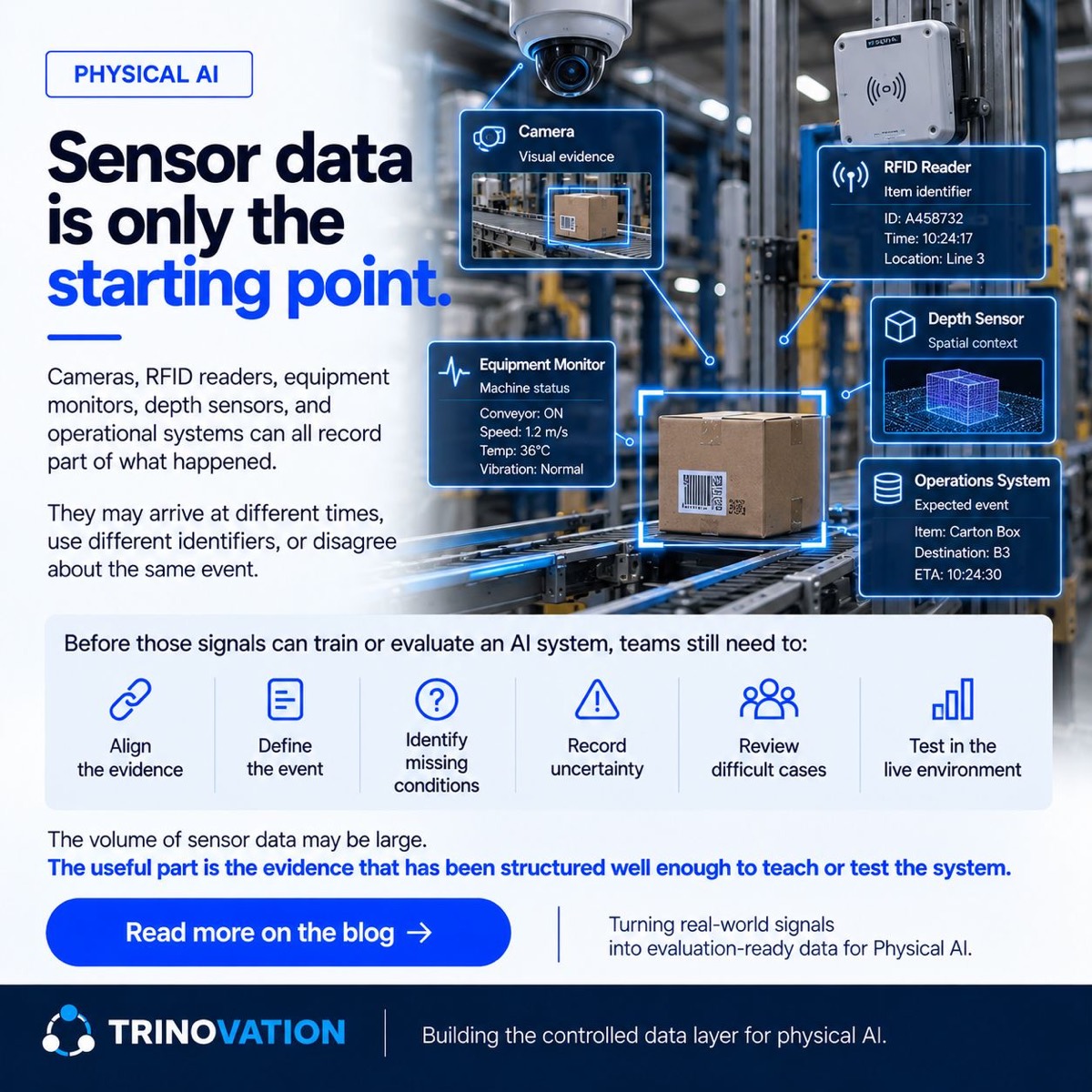
Physical AI often depends on several sources at once: cameras, depth sensors, RFID, temperature monitors, equipment logs, inventory records and human input. Each source sees only part of the event.
Raw signals need a common definition
Consider a product that appears to leave a shelf. The camera may show movement. A weight sensor may show a change. The inventory system may still show the product in stock. The correct label depends on what the system is supposed to decide and how the sources should be reconciled.
Industrial and facility environments create similar questions. Did a machine stop because of a fault, a planned pause or an upstream delay? Did a temperature change create a meaningful event, or did the sensor drift? The label may require context across time, systems and specialist review.
Synchronization and coverage are quality questions
Teams need to know whether timestamps align closely enough for the intended decision, whether device changes affect the signal and whether important operating conditions appear in the data.
They also need a way to record uncertainty. Forcing every case into a clean category can make a dataset look complete while hiding the conditions the model does not understand.
NIST describes the AI Risk Management Framework as a way to incorporate trustworthiness into the design, development, use and evaluation of AI systems.[1] For sensor-driven systems, the practical implication is that measurement and evaluation continue after the first dataset is complete.
Before those signals can train or evaluate an AI system, teams still need to:
- Align the evidence
- Define the event
- Identify missing conditions
- Record uncertainty
- Review difficult cases
- Test in the live environment
Turning sensor streams into evaluation-ready data?
Send us a sample. We label 500 frames in 5 days and send back an accuracy report — no contract, no call required.
Get a Free 500-Frame Pilot →The data operation begins after capture
Hardware providers capture signals. Data platforms store and process them. Model teams use the resulting evidence. Between those layers, someone still has to define events, annotate sequences, resolve disagreement, build gold sets and return live failures to the evaluation process.
That is where we can contribute: the controlled preparation and evaluation of the data those sensors produce. Our focus is the data, rather than the sensor hardware.
Raw data volume is not the same as usable evidence. The difference comes from definitions, review and a clear connection to the decision the AI system is expected to make.
Building the controlled data layer for physical AI.
Trinovation deploys domain-trained review teams with structured taxonomies, QA workflows and evaluation-ready datasets. First delivery in 2 weeks.
Get a Free 500-Frame Pilot → Book a 30-Min Call → Download the ChecklistSource and review note: [1] NIST AI Risk Management Framework, cited in support of the lifecycle evaluation principle. The operating examples are explanatory and do not imply a specific deployment by our team.